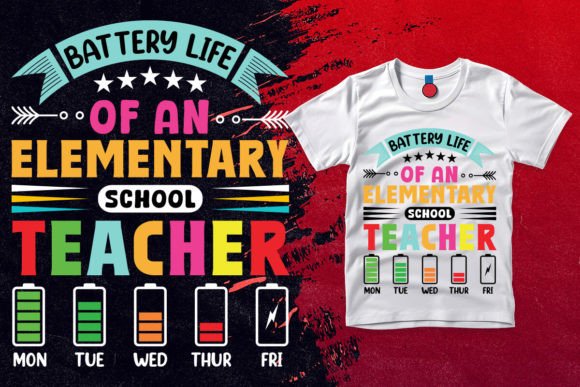
Battery Life of an Elementary School Tea
First Impressions: A Warm, Wry Nod to Teacher Resilience
Opening Battery Life of an Elementary School Tea feels like spotting a well-worn coffee mug on a classroom desk—quietly relatable, gently humorous, and instantly human. It’s not flashy or overly literal; instead, it leans into visual shorthand: soft curves, balanced negative space, and a tone that lands somewhere between “I survived recess” and “please send snacks.” As a designer who’s stitched hundreds of teacher-themed pieces—from embroidered aprons for school bake sales to personalized tote bags for PTA volunteers—I immediately sense this isn’t just another cliché. It breathes. That matters when you’re translating a digital embroidery file into something tactile, wearable, and emotionally resonant.
Where It Shines: Real Projects, Real Fabric
I recently tested Battery Life of an Elementary School Tea on a midweight cotton-blend sweatshirt for a local teacher appreciation pop-up. Stitched with a light tear-away stabilizer and 40-weight poly thread, the design held its shape beautifully—even across the slight curve of the chest panel. The layout is generous but not sprawling: ideal for a left-chest placement on custom apparel, centered on a pillow cover, or scaled down for a baby onesie (though I’d simplify the text slightly for under-24-month items). It also translated cleanly to a woven tote bag—no ghosting, no skipped stitches—and read clearly at arm’s length, which is critical for boutique merchandise or craft fair displays.
What surprised me was how well it worked as an embroidered patch. The clean line weight and moderate stitch density meant it didn’t pucker or stiffen excessively on twill or denim backing. For Etsy sellers offering handmade teacher gifts, that versatility is gold: one digital embroidery file supporting sweatshirt embroidery, tote bag design, pillow covers, and even kitchen towels—without needing separate vector edits or re-digitizing.
Where to Pause: Texture, Scale, and Context
This isn’t a one-size-fits-all machine embroidery design. On ultra-thin fabrics like rayon challis or lightweight voile, the fill stitch areas can telegraph more than intended—especially if using dark thread on light fabric without proper cut-away stabilizer. I’d avoid it on stretchy knits (think performance tees or baby leggings) unless paired with a high-quality adhesive stabilizer and reduced stitch density—something you’ll want to confirm in your embroidery software before hooping.
Small hoop sizes (under 4”) demand attention too. The phrase “Battery Life” sits comfortably in a 5x7 hoop, but compressing it further risks muddying the letterforms. And while it reads well on light and medium fabrics, on deep charcoal or navy hoodies, test your thread colors carefully—some off-white or cream tones lose contrast faster than expected after washing. Always run a black-and-white mockup first; what looks charming on screen can flatten into visual noise on dark fabric.
Design Integrity Meets Handmade Value
Battery Life of an Elementary School Tea earns trust because it doesn’t over-promise. It doesn’t try to be a full-color graphic or mimic photorealism—it owns its role as a clean, intentional embroidery file. That restraint pays off in finished product perception: customers see craftsmanship, not clutter. When used on nursery decor or holiday embroidery (think teacher-themed Christmas stockings), it signals thoughtfulness—not just decoration. For small shop owners building brand consistency, that tone aligns seamlessly with values like warmth, authenticity, and quiet professionalism.
It also avoids common pitfalls in T-Shirt Designs meant for embroidery: no tiny serifs, no overlapping fine lines, no gradients that require color blending or specialty stitches. As a Graphics file adapted for stitching, it respects the limits—and strengths—of the medium. That directly impacts buyer engagement: people don’t just buy the design; they buy the confidence that it will stitch cleanly, wear well, and reflect well on their craft business.
Practical Designer Notes Before You Stitch
- Test first: Run Battery Life of an Elementary School Tea on scrap fabric matching your final project’s weight and stretch.
- Stabilizer matters: Use cut-away for knits, tear-away for stable wovens, and fusible + tear-away for textured surfaces like terry cloth towels.
- Check detail integrity: Zoom in on corners and inner curves—does the satin stitch wrap cleanly? Are small elements legible at your target size?
- Thread contrast is non-negotiable: Try your chosen thread on both light and dark fabric swatches before committing to a full run.
- Licensing clarity: Since this is marketed as a digital embroidery file for commercial use (e.g., printed on mugs, pillows, apparel), verify whether resale of stitched items or redistribution of the file itself is permitted—especially if you’re an Etsy seller or craft fair vendor.
- Mock it right: Use printable mockups—not just flat PNGs—to preview how Battery Life of an Elementary School Tea lives on curved or textured products like caps or aprons.
Final Thought: A Design That Fits the Moment
This isn’t just another teacher-themed graphic. Battery Life of an Elementary School Tea works because it meets makers where they are: balancing humor with heart, simplicity with intention, and digital flexibility with real-world stitchability. Whether you’re prepping a batch of embroidered patches for back-to-school orders, designing personalized gifts for a retiring educator, or building a cohesive line of boutique-branded teacher apparel, it holds up—not as filler, but as finish.
That’s the mark of strong design assets: they don’t shout. They settle in. And when your customer runs a finger over that smooth satin stitch and smiles? That’s when you know the battery’s still charged.