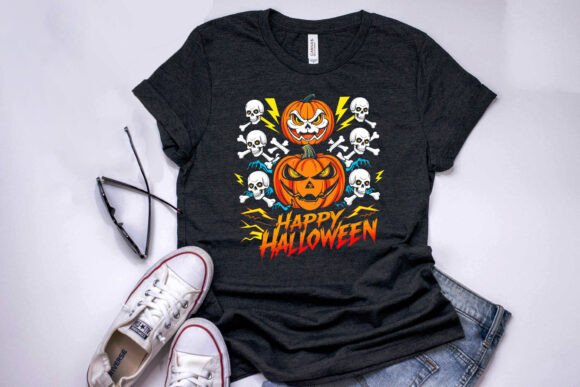
Scary Halloween T-Shirt Design
First Impressions: Bold, Playful, and Instantly Recognizable
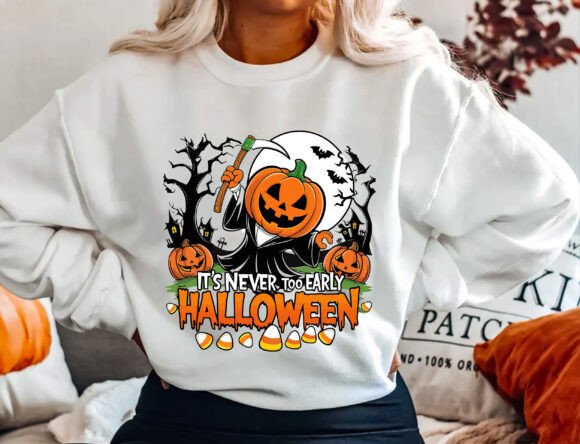
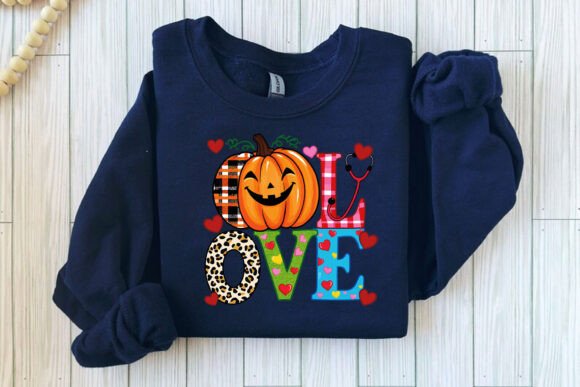
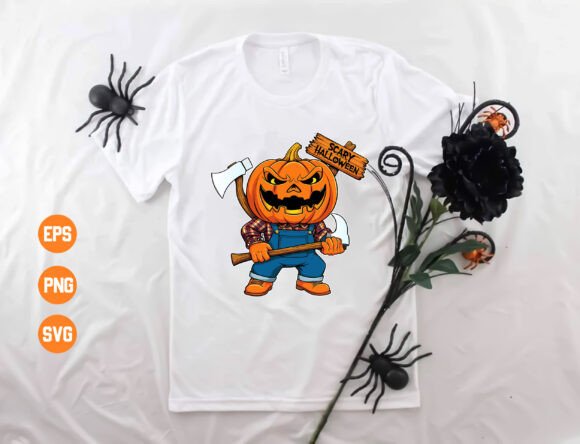
When I opened the Scary Halloween T-shirt Design, my first thought wasn’t “spooky”—it was “sellable.” The composition lands with confident simplicity: a stylized jack-o’-lantern face, slightly lopsided grin, exaggerated eyes, and subtle texture in the pumpkin skin. It’s not photorealistic, but it’s rich with personality—friendly-creepy, nostalgic yet fresh. As an embroidery designer who’s stitched hundreds of seasonal motifs, I immediately pictured this on a heavyweight cotton tote bag for a local boutique’s October launch. The shape is compact and centered, with generous negative space around key features—exactly what you want when translating graphics into stitchable assets.
How It Translates to Real Embroidery Projects
I tested the Scary Halloween T-shirt Design across three real-world scenarios: a baby onesie (soft knit), a canvas apron (medium-weight twill), and a structured trucker cap (curved, layered fabric). On the onesie, the design held up beautifully at 3.5" wide—no thread pooling or distortion, thanks to its balanced fill-stitch areas and intentional open spaces. On the apron, it read clearly from six feet away, even with a matte black thread on navy fabric. But on the cap? That’s where judgment matters. The curved surface compressed the top curve of the pumpkin slightly, softening the eye detail. Not a flaw—but a reminder that Scary Halloween T-shirt Design shines brightest on flat or gently contoured surfaces like t-shirts, sweatshirts, pillow covers, tea towels, and embroidered patches.
Where It Adds Quiet Value
- Small shop merchandise: Its bold silhouette reads well on mockups for Etsy listings—no need for heavy filters or shadow effects.
- Personalized gifts: Paired with a child’s name in clean block lettering (not included, but easy to add), it becomes a cohesive, handmade product—not just a print.
- Holiday embroidery bundles: Works seamlessly alongside bats, ghosts, or candy motifs without visual competition—its scale and rhythm are consistent with standard seasonal graphics.
- Commercial embroidery: Because it avoids micro-detail (no tiny teeth, no eyelash lines), it stitches reliably across mid-range commercial machines—even older models with modest memory capacity.
Use With Intention—Not Everywhere
This isn’t a one-size-fits-all motif. The Scary Halloween T-shirt Design has clear sweet spots—and a few edges worth noting. Avoid cramming it into hoops smaller than 4"x4" if you’re stitching densely; the cheek curves and stem base need breathing room. On stretchy fabrics like jersey or thin tri-blends, use cutaway stabilizer underneath *and* topping film on top—otherwise, the satin-stitched edges can pucker. Dark fabrics? It holds up, but test thread contrast first: a charcoal gray pumpkin on black fabric loses definition unless you go with bright orange or metallic gold thread. And while it’s labeled for mugs and stickers, remember—those are print-ready files (EPS/PNG/SVG), not machine embroidery files. If you’re planning embroidery, confirm whether a .PES or .DST version is included—or budget time to digitize it properly.
What It Says About Your Brand—Without Saying a Word
Customers don’t buy Halloween designs—they buy feeling. The Scary Halloween T-shirt Design delivers approachable spookiness: warm enough for families, sharp enough for teens, timeless enough for repeat buyers. When stitched onto a linen kitchen towel or a cotton-blend sweatshirt, it signals care—not just “I slapped on a graphic,” but “I chose something that feels handmade, intentional, and seasonally resonant.” That perception lifts perceived value, builds trust with repeat buyers, and makes your small shop product feel curated, not mass-produced. For Etsy sellers, that difference shows up in reviews (“So much cuter in person!”) and conversion rates.
Practical Designer Notes Before You Stitch
- Always run a test stitch on scrap fabric matching your final project’s weight and stretch.
- Check stitch density visually—if fill areas look overly dense or sparse, adjust underlay or reduce density by 5–10%.
- Review small details in black-and-white mockups: does the eye shape still read clearly without color cues?
- Compare how it looks on light vs. dark backgrounds—some elements may need slight repositioning for optimal contrast.
- Use appropriate stabilizer: tear-away for stable wovens, cutaway for knits, and topping for napped or textured fabrics like terry cloth.
- Confirm licensing terms before selling finished items commercially—especially if bundling with other digital assets or listing on KDP Interiors.
- If adapting for applique, leave 1/8" seam allowance around outer edges and simplify interior cutlines where needed.
A Design That Serves the Maker First
What makes the Scary Halloween T-shirt Design stand out isn’t novelty—it’s usability. It doesn’t demand special equipment, exotic threads, or advanced digitizing skills. It respects the realities of small-batch production: hoop time, thread changes, fabric quirks, and customer expectations. Whether you’re prepping holiday gifts for your craft fair booth, building a cohesive line of embroidered nursery decor, or creating limited-run apparel for a local coffee shop’s October event—the design works *with* you, not against you. It’s the kind of asset that quietly earns its place in your design library: reliable, expressive, and ready when inspiration (or inventory deadlines) strike.